
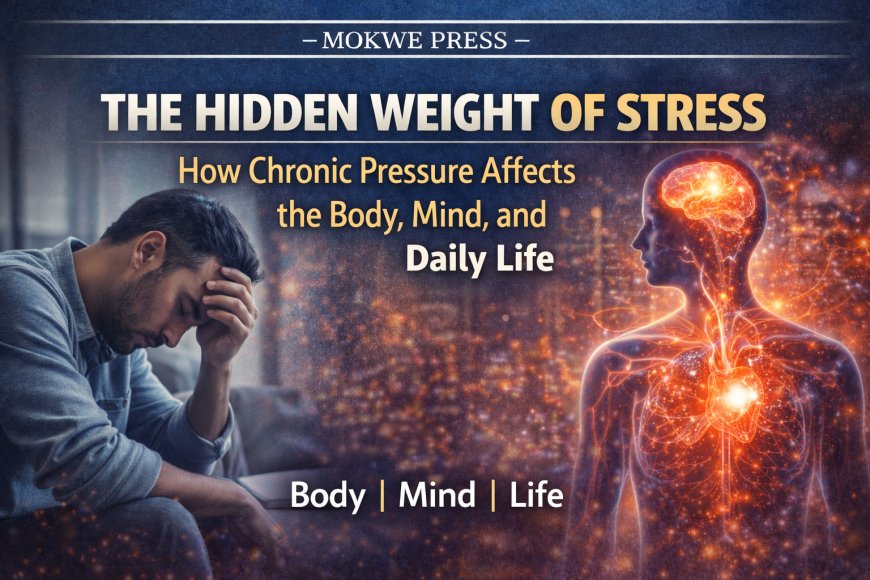
Stress is one of the most normalized health burdens of modern life.
People carry work pressure, family responsibilities, financial strain, digital overload, uncertainty, and emotional weight all at once. Because stress is so common, many begin to treat it as background noise — something to push through rather than something to understand.
But stress does not disappear just because it becomes familiar.
The body keeps track of pressure, even when a person tries to stay productive through it. Over time, chronic stress can shape far more than mood. It can affect sleep, concentration, digestion, energy, patience, appetite, muscle tension, and the ability to feel mentally clear.
Stress Is Not Always Loud
Many people think stress always looks dramatic. Sometimes it does. But often it shows up quietly.
It can look like waking up tired even after sleep. It can feel like brain fog, short patience, body tension, headaches, shallow breathing, or the sense of always being “on.” It can show up as emotional numbness, constant worry, or an inability to fully relax even during moments that are supposed to feel calm.
Stress is not always a breakdown. Sometimes it is a slow wearing down.
That is what makes it so easy to overlook.
The Body Responds to Pressure Physically
Stress is often discussed emotionally, but it is deeply physical.
When the body stays in a prolonged state of pressure, it can begin functioning as if danger is always nearby. Muscles remain tight. Sleep becomes lighter or disrupted. Digestion can change. Energy rises and crashes unpredictably. Focus may narrow. Recovery becomes harder.
Even when the source of stress is not dramatic in a single moment, repeated exposure can still wear down the nervous system over time. The issue is not only intensity. It is duration.
A person under chronic pressure may still be showing up to work, caring for others, paying bills, and managing responsibilities. From the outside, they may look functional. Inside, they may be running on depletion.
Mental Clarity Suffers Too
Stress affects the way people think.
It can make decision-making harder, reduce patience, increase irritability, and make small problems feel bigger than they are. It can also crowd out creativity, joy, and the ability to feel fully present.
When the mind is overloaded, everything starts to feel urgent. Rest becomes harder. Perspective narrows. Even basic tasks can feel heavier than usual.
That does not mean a person is weak. It means pressure has consequences.
Chronic Stress Can Reshape Daily Life
One of the most overlooked parts of stress is how it changes ordinary living.
It can affect how people speak to loved ones, how they eat, how they sleep, how often they move their body, how much they isolate, and how much hope or enjoyment they feel throughout the week. Stress can quietly reduce quality of life long before it causes a visible crisis.
Because the change is gradual, many people adjust to unhealthy patterns without realizing how far they have drifted from balance.
Recovery Has to Be Intentional
Stress management is often reduced to slogans, but recovery usually starts with practical choices.
Sleep matters. Quiet matters. Boundaries matter. Nutrition matters. Movement matters. Time away from constant stimulation matters. Emotional support matters too. People are not built to carry every burden alone without effect.
Not every source of stress can be removed quickly. Real life is not always flexible. But even when circumstances stay difficult, the body and mind still need relief where possible.
Small recovery habits, done consistently, can help interrupt the cycle of constant pressure.
Final Word
Stress may be common, but that does not make it harmless.
When pressure becomes chronic, it can shape the body, cloud the mind, and quietly reduce the quality of daily life. Paying attention to stress is not overreacting. It is part of protecting health.
The goal is not to live without responsibility. It is to live without letting constant pressure become your normal state.
Health includes more than survival.
It includes breathing room.
DISCLAIMER:
This article is for informational and commentary purposes only and is not a substitute for medical advice, diagnosis, or treatment. For ongoing physical or mental health concerns, consult a licensed healthcare professional.