
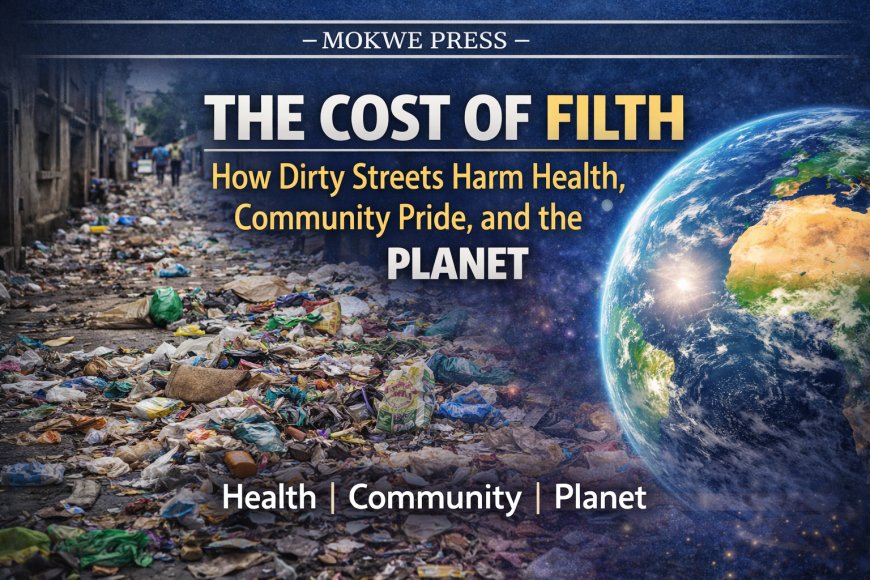
Dirty streets are often dismissed as a visual problem, something unpleasant but easy to ignore. In reality, public filth carries a much higher cost. When trash piles up in neighborhoods, sidewalks, lots, alleyways, and drainage areas, the damage reaches far beyond appearance.
It affects health. It affects morale. It affects how people view their community and how the outside world views it too. Over time, unmanaged waste becomes a sign of deeper neglect — one that touches daily life in ways many people underestimate.
Cleanliness is not about perfection. It is about standards, safety, and respect for the places where people live.
Dirty Streets Create Public Health Risks
Waste left in public spaces does not simply sit there without consequence. Rotting trash can attract rodents, insects, and stray animals. Standing waste can contribute to bacteria exposure, foul odors, and contaminated runoff. Plastic, food waste, and discarded materials can also clog drainage systems, increasing the risk of flooding and stagnant water.
Children are often among the most affected. They play near streets, sidewalks, and open spaces that should be safe. Older adults and people with health conditions may also face greater risk when sanitation breaks down around them.
A dirty street is not just unpleasant to walk past. It can become part of a chain of preventable health problems.
Filth Changes the Emotional Climate of a Community
There is also a psychological cost to disorder.
When people are surrounded by overflowing trash, neglected lots, and badly maintained public areas, it shapes how a place feels. Neglect sends a message. It tells residents that care is low, standards are weak, and disorder is being accepted as normal. Over time, that can wear down morale and reduce community pride.
People deserve to feel dignity in the places where they live. They deserve to walk outside without feeling like decay has become part of the neighborhood identity. Clean surroundings do not solve every social problem, but dirty ones often make existing problems feel heavier.
Public Cleanliness Reflects Civic Culture
A clean environment usually does not happen by accident. It reflects habits, systems, and shared expectations.
Cities need functioning sanitation systems, regular trash collection, public bins, drainage maintenance, and enforcement against dumping. Communities also need public awareness and personal responsibility. If people treat streets, sidewalks, and lots as disposable spaces, the damage builds quickly.
The issue is not only what governments fail to do. It is also what communities begin to tolerate.
Once filth becomes normal, it lowers the standard for everything around it.
The Environmental Damage Does Not Stay Local
Street trash is not just a neighborhood problem. It becomes an environmental problem too.
Waste left in public spaces can be carried into storm drains, rivers, and oceans. Plastic breaks down into smaller particles that remain in the environment for long periods of time. Burning garbage pollutes the air. Illegal dumping damages land and water systems that entire communities rely on.
What starts as one neglected block can eventually contribute to a larger cycle of pollution and environmental stress. The planet absorbs the consequences of local neglect every day.
That is why sanitation should be treated as part of environmental responsibility, not as a minor background issue.
Community Pride Begins With Care
People often talk about rebuilding communities in big, abstract terms. But one of the most visible signs of care is much simpler: whether a place is being kept clean.
Clean streets show effort. They show that people still believe an area is worth maintaining. They support local pride, improve first impressions, and help create environments where families, workers, and small businesses can function with greater dignity.
No community should be forced to accept filth as its identity.
Final Word
The cost of filth is never just visual.
Dirty streets can harm health, weaken morale, damage the environment, and slowly teach people to accept conditions that should never be treated as normal. Public cleanliness is not a luxury reserved for wealthy areas. It is part of basic human dignity and responsible civic life.
A cleaner planet begins with cleaner neighborhoods. And cleaner neighborhoods begin when people stop treating trash, pollution, and neglect as something ordinary.
DISCLAIMER:
This article is for informational and commentary purposes only. Mokwe Press is an independent newsroom focused on culture, public life, business, technology, and society.