
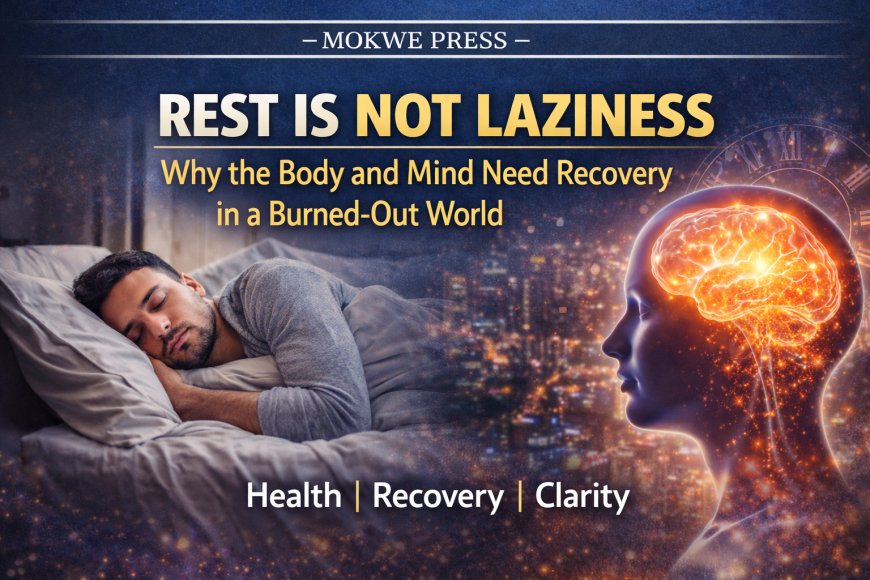
In many modern cultures, exhaustion has been normalized.
People push through stress, ignore warning signs, glorify overwork, and treat rest like something that has to be earned only after total depletion. Being constantly tired has become so common that many no longer see it as a problem. It is simply called normal life.
But the body does not view it that way.
The human body is not designed for endless output without recovery. The mind is not built to absorb constant pressure, noise, stimulation, and emotional strain without consequence. Rest is not laziness. It is maintenance. It is repair. It is one of the foundations of health.
Burnout Does Not Arrive All at Once
Burnout usually builds slowly.
It often begins as mental fatigue, low patience, poor sleep, difficulty focusing, emotional numbness, or a constant feeling of being behind. Over time, it can show up physically too. Headaches, body tension, irritability, shallow breathing, forgetfulness, and a sense of heaviness can all become part of the pattern.
Many people keep going because responsibilities do not stop. Bills still come. Children still need care. Work still demands attention. Life does not always make room for recovery.
That is exactly why recovery has to be taken seriously.
Rest Supports Both Mind and Body
Rest is not only about sleep, though sleep matters deeply. It is also about reducing overload.
The nervous system needs periods of calm. The muscles need recovery. The brain needs quiet moments to process, reset, and stabilize. Emotional rest matters too. Constant exposure to stress, conflict, bad news, pressure, and digital noise can wear a person down even if they appear functional on the outside.
A person can be awake and still deeply depleted.
Real wellness includes space to slow down.
Productivity Culture Has Distorted Health
One of the biggest problems in modern wellness is that people are often praised for functioning while unwell.
Pushing through pain is admired. Skipping breaks is admired. Running on little sleep is admired. Always being available is admired. But these habits do not build health. They often hide decline until the body finally forces a stop.
A culture that rewards depletion should not be the standard by which people measure their worth.
Recovery is not weakness. It is wisdom.
Simple Rest Still Matters
Rest does not always require a perfect retreat, a vacation, or a luxury routine. Sometimes it begins with basic, consistent care.
Getting enough sleep. Sitting in silence. Stepping away from screens. Taking a walk. Drinking water. Saying no to unnecessary demands. Giving the mind fewer things to carry for a moment. Allowing the body to pause before it reaches collapse.
These actions may seem small, but repeated over time, small recovery habits protect health in powerful ways.
Wellness Is Not Just About Appearance
Health and wellness are often marketed through images, routines, products, and performance goals. But true wellness is deeper than appearance.
It includes mental clarity. Emotional steadiness. The ability to breathe without constant pressure in the chest. The ability to think without overload. The ability to sleep, recover, and feel present in your own life.
Someone can look productive and still be unwell. Someone can be successful on paper and still be running on empty.
Wellness should be measured by stability, not just performance.
Final Word
Rest is not a reward for breaking yourself down. It is part of how you stay whole.
In an overstimulated and burned-out world, choosing recovery is not falling behind. It is protecting your health, your clarity, and your ability to keep living without being consumed by exhaustion.
The body needs rest. The mind needs rest. Human beings need rest.
And that truth should never have to be defended.
DISCLAIMER:
This article is for informational and commentary purposes only and is not a substitute for medical advice, diagnosis, or treatment. For persistent physical or mental health concerns, consult a licensed healthcare professional.